
(只提供英文版本) “From the demand side, users should intentionally choose ‘good enough’ technology.”
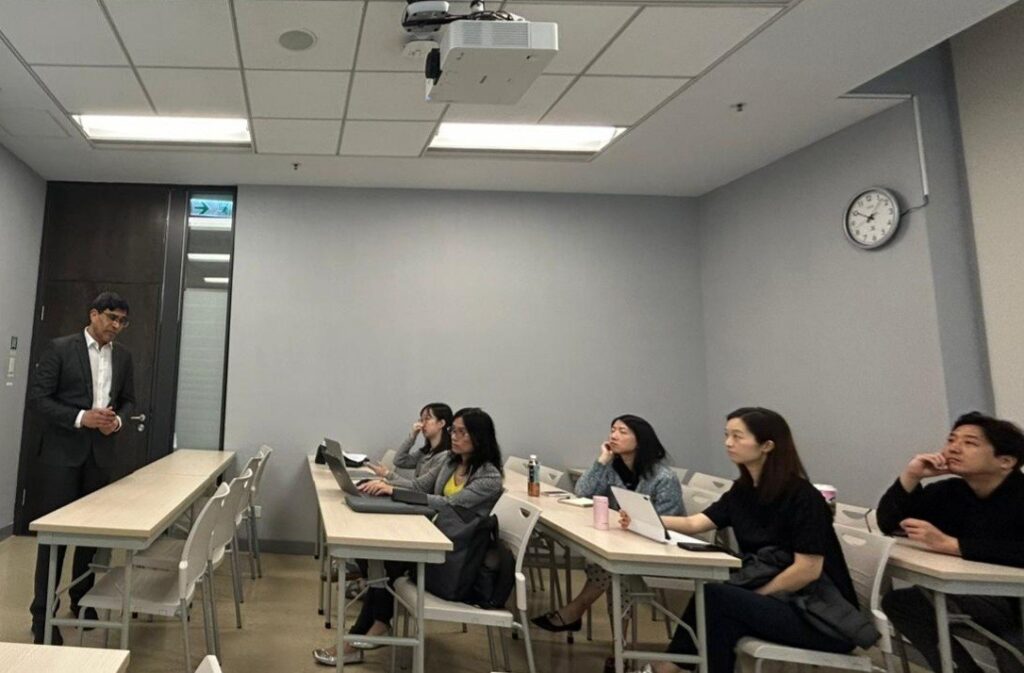
Professor Israr Qureshi from Queen’s Business School, Queen’s University Belfast, shared this perspective during a Department of Management research seminar held on 26 March.
The seminar introduced Technoficing—defined as the strategic and creative adaptation of accessible, “good enough” technologies to achieve social, economic or environmental goals, particularly in rural or marginalised communities. Professor Qureshi emphasised the role of user choice in shaping how technologies are adopted and sustained.
He also highlighted the environmental impact of constant upgrading driven by planned obsolescence. Such practices, he noted, generate significant volumes of e‑waste with very low recyclability, making them a major contributor to environmental harm.
“On one hand, durable products fail if users keep upgrading. On the other hand, mindful users need durable products. Mutual reinforcement between supply and demand is key to Technoficing,” he explained. This observation led to discussion on why sustainability cannot rely on efficiency alone, but must also involve behavioural and institutional change.
The seminar also echoed Antonio Gramsci’s idea of “pessimism of the intellect, optimism of the will.”
Participants reflected that while the severity of social challenges such as inequality is well understood—and can invite pessimism—there remains a shared determination to pursue constructive solutions. In this context, Professor Qureshi’s research was seen as offering an intellectually grounded response: one that acknowledges structural problems while remaining oriented toward practical, solution‑driven thinking.
Professor Qureshi concluded by sharing his current research, including work on the Technoficing Scale, developed to understand how individuals experience a sense of technological “sufficiency.” The scale focuses on users’ subjective feelings that their existing devices and platforms meet their needs, rather than on access or novelty. The research aims to support a shared understanding of technological sufficiency that could help drive broader policy change and more authentic forms of connection beyond purely virtual engagement.